
Can You Get Hair Extensions If You Have Psoriasis?
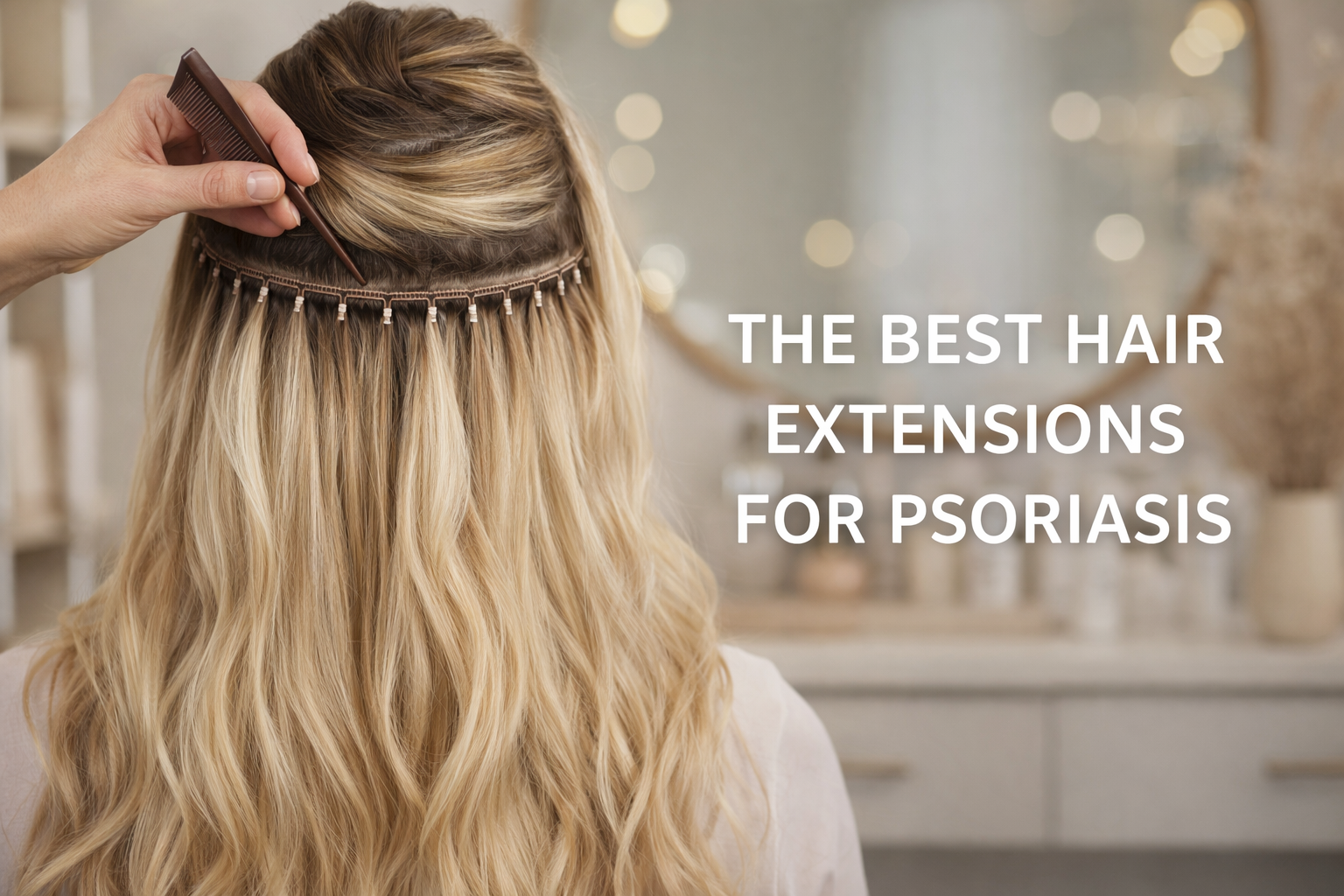
Yes, but not all extensions are created equal.
The biggest risks come from:
Excessive tension on the scalp
Harsh adhesives or chemicals
Poor installation techniques
Lack of proper maintenance
When extensions are applied thoughtfully and tailored to your scalp condition, they can actually be worn comfortably without triggering flare-ups.
This is where working with a specialist matters. A personalized consultation is essential to assess your scalp, your hair type, and your current level of sensitivity.

The Best Hair Extensions for Psoriasis
1. Hand-Tied Weft Extensions
Hand-tied wefts are one of the most recommended options for clients with sensitive scalps.
Why they work:
Lightweight and flexible
Minimal tension when installed properly
No glue or harsh adhesives
Breathable rows that allow scalp access
These extensions are sewn onto small, discreet rows of beads, which means your scalp is not fully covered or suffocated.
For many clients with psoriasis, this is the safest and most comfortable long-term option.
2. Tape-In Extensions (With Caution)
Tape-ins can work, but they are not for everyone with psoriasis.
Pros:
Lightweight and flat against the head
Quick installation
Natural-looking results
Cons:
Adhesive can irritate sensitive skin
Not ideal during active flare-ups
Requires careful removal to avoid pulling
If your psoriasis is mild and well-managed, tape-ins may be an option. But they should always be applied and removed by a professional who understands scalp sensitivity.
3. Clip-In Extensions (Temporary Option)
Clip-ins are a great low-commitment choice.
Why they work:
No adhesives or chemicals
Can be removed anytime
Ideal for special occasions
However, they are not meant for daily wear if you have scalp sensitivity. Repeated clipping in the same areas can create pressure and irritation over time.
Think of these as a flexible, occasional solution.
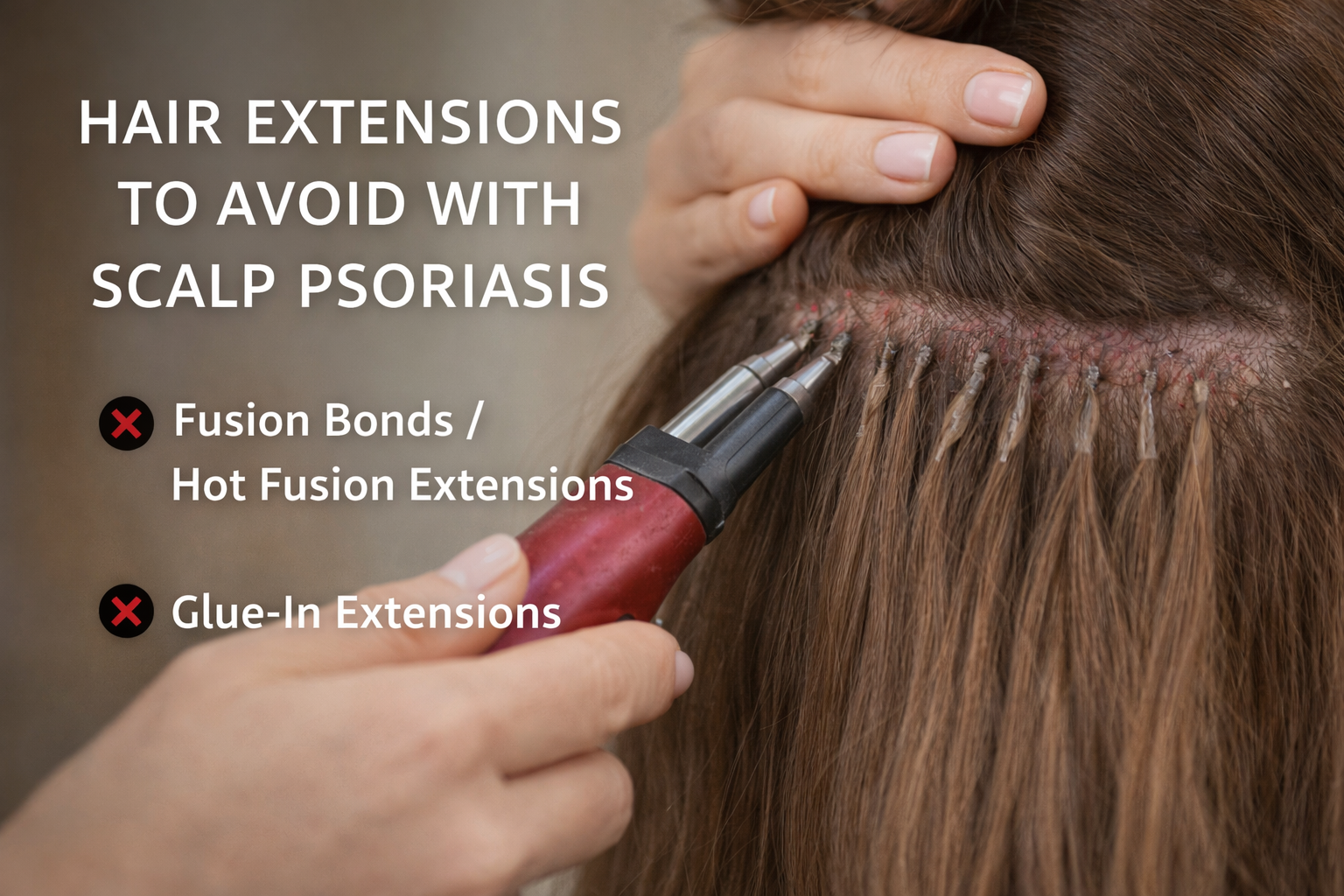
Hair Extensions to Avoid with Psoriasis
Some methods are simply too harsh for an already sensitive scalp.
Fusion or Keratin Bond Extensions
These involve heat and adhesive bonding directly to your hair. The process can be too aggressive and difficult to remove without stress on the scalp.
Tight Braided Sew-Ins
These create constant tension and can aggravate inflammation, especially if your scalp is already compromised.
Micro Links or Nano Beads (Improperly Installed)
While not always off-limits, poorly installed bead methods can create pressure points and discomfort.
The key factor is not just the method, but the execution. Even “safe” extensions can become problematic if applied incorrectly.
What to Consider Before Getting Extensions
Before committing to extensions, take a step back and assess your current scalp condition.
1. Are You in an Flare-Up?
If your scalp is inflamed, irritated, or actively flaking, it is best to wait.
Applying extensions during a flare-up can:
Increase discomfort
Trap irritation
Slow healing
2. Have You Had a Consultation?
A proper consultation should include:
Scalp assessment
Discussion of your psoriasis history
Identification of trigger areas
A customized extension plan
This is not a one-size-fits-all process.
3. Are You Prepared for Maintenance?
Extensions require ongoing care. With psoriasis, that care becomes even more important.
You need to:
Keep the scalp clean but not over-washed
Use gentle, non-irritating products
Avoid buildup near the roots
Maintain regular adjustment appointments
How to Care for Hair Extensions with Psoriasis
The goal is to protect both your scalp and your extensions.
Gentle Washing Routine
Use sulfate-free, calming shampoos
Focus on the scalp without aggressive scrubbing
Rinse thoroughly to prevent buildup
Keep the Scalp Accessible
With methods like hand-tied wefts, you can still reach your scalp between rows. This is essential for managing psoriasis.
Avoid Heavy Oils at the Root
While oils can feel soothing, they can also cause buildup around extension attachments.
Instead, use lightweight, targeted treatments recommended by your stylist or dermatologist.
Stay Consistent with Maintenance
Regular move-ups or adjustments ensure:
Even weight distribution
Reduced tension
A healthier scalp environment
When to Pause or Remove Extensions
Listen to your scalp.
You should remove or adjust extensions if you notice:
Increased irritation or redness
Persistent discomfort
Tightness or pulling
Worsening psoriasis symptoms
Extensions should never feel painful. Comfort is a non-negotiable.
Why the Right Hair Extension Expert Matters
This is where most people get it wrong.
Hair extensions are not just about length and volume. They are about how they are applied, where they are placed, and whether they respect your scalp health.
At Angele’s Extensions Studio, every installation starts with understanding you:
Your scalp condition
Your lifestyle
Your hair goals
Your comfort level
There is no rushing the process, and no forcing a method that does not suit you.
The focus is always on creating results that feel as good as they look.
Final Thoughts
Having scalp psoriasis does not mean giving up on hair extensions. It just means being more intentional.
The right method, applied with care, can give you beautiful, natural results without compromising your scalp health.
If you have been unsure or hesitant, that is completely valid. But with the right guidance, there are safe and comfortable options available.
More Questions About Hair Questions?
Check out Angele’s FAQ Page HERE
Professional Support Makes the Difference

Let’s chat!
I offer consultations to help you understand your options and find a solution that feels like you.
Book your appointment with me today !